Primary and secondary packaging

<span>Primary or secondary</span> packaging

At Nomi Co-Packing, we never look at packaging material or design in isolation. We always start by analyzing how a product behaves during production, transport, storage, and daily use. Therefore, primary and secondary packaging are not separate concepts to us, but two interconnected links that together determine the efficiency of a production run and the product's performance in the market.

Brands partner with us because they need an expert who understands how packaging functions in practice. Packaging must not only be visually appealing but also compatible with line speeds, mechanical handling, and retail requirements. That is why we provide proactive advice and support from the initial consultation to the moment the last case leaves our facility.

DEFINITIONS AND CONTEXT

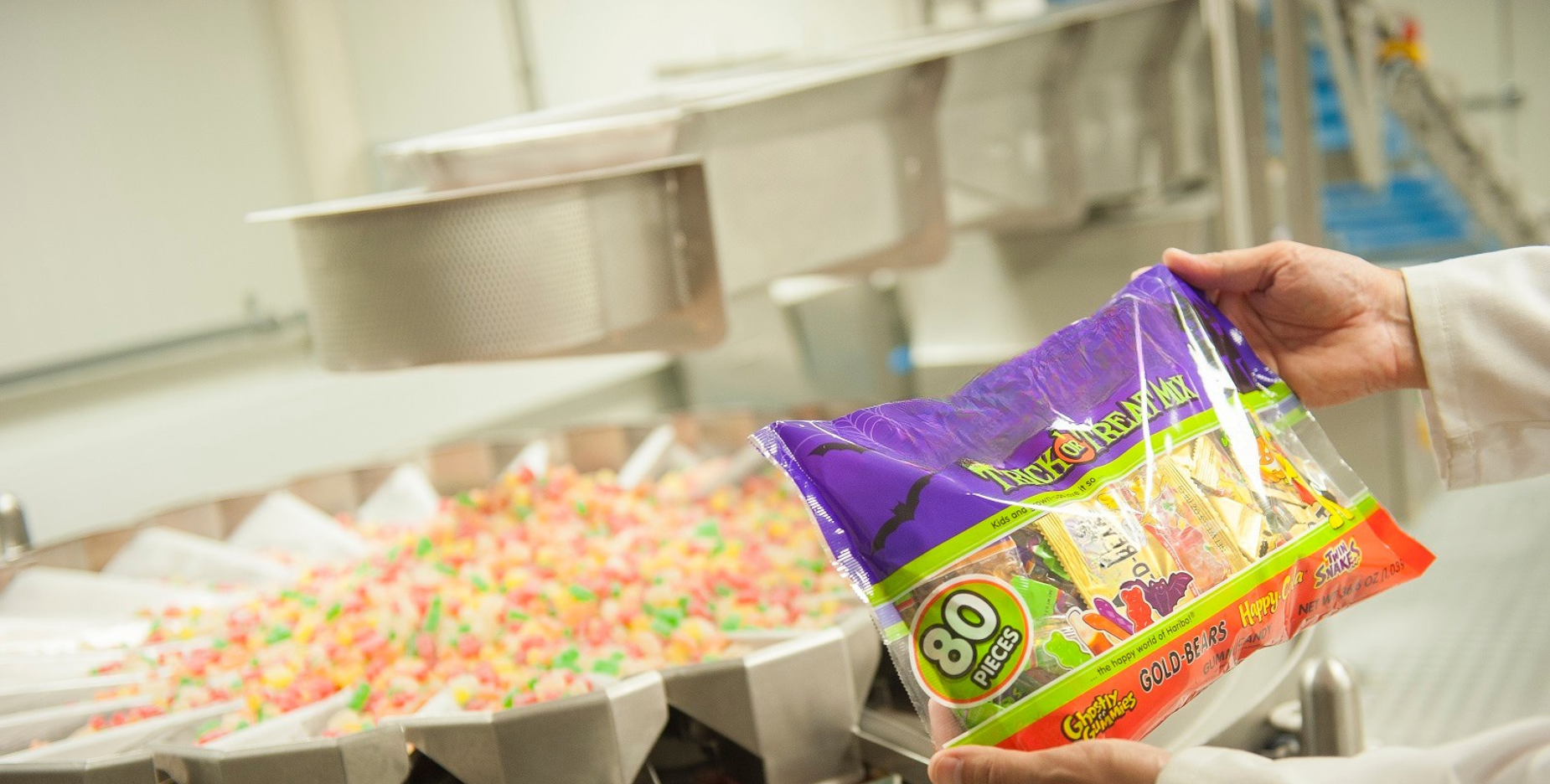
In our production environment, we define primary packaging as the first protective layer around the product. Whether it is the film around a piece of candy or the wrapper of a snack bar, this layer determines shelf life and resistance to impact, air, and moisture. Experience shows that this layer is often the key to stability throughout the entire process.

Secondary packaging provides the structure for logistics and presentation. This includes cases, bundles, or retail-ready packaging (RRP). We focus not only on aesthetics but primarily on structural integrity, load utilization, and the ergonomics for operators on the line or in the warehouse.

Tertiary packaging is the transport layer. While consumers never see it, we handle it every day. It is crucial that this layer integrates perfectly with the others to ensure stable pallets and safe transit through the supply chain.

In our workflow, the interaction between these layers is more important than their definitions. If the first layer is too weak, the second must compensate. If the second layer is too loose, the contents will shift during transport. This expertise makes the difference between packaging that works and packaging that causes downtime.

THE CO-PACKING WORKFLOW

Phase One: Primary Packaging This is where the product and technology first meet. We fill, seal, and immediately inspect for hygiene and precision. We daily process a wide variety of dry food products such as bars, snacks, confectionery, and small portions—each with its own unique behavior on the line. Some products require a gentle inflow to maintain their shape, while others can be processed at higher speeds as long as the seal integrity is guaranteed.

Phase Two: Secondary Packaging Here, we prepare products for retail and logistics. This phase involves bundling, grouping, and packing into cases, sets, multipacks, and retail displays. We optimize for strength, dimensions, stackability, and durability during distribution. We consistently see that the secondary layer is a major factor in operational efficiency.

KEY CONSIDERATIONS IN BOTH LAYERS

Our choices always start with the product itself. A flexible primary pack requires the support of a sturdy secondary layer. Conversely, a rigid consumer pack can be paired with a lighter outer shell. This synergy is what determines the stability of a production run.

Regulatory information, such as ingredients, allergens, and shelf life, is placed on the primary layer. Logistical data, including batch codes and barcodes, is integrated into the secondary packaging. This clear separation prevents errors during processing and transit. Our workflow is fully aligned with the stringent requirements of industry certifications (such as IFS and BRC).

Sustainability plays an increasingly vital role. Brands are opting for lightweight materials, recyclable consumer packaging, or cardboard with a lower environmental impact. Because we handle these materials daily, we can immediately assess whether a sustainable alternative is technically feasible on the production line.

Automation ensures speed and repeatability. By automating the filling, sealing, bundling, and inspection processes, we maintain consistent quality, even for high-volume orders.

At Nomi Co-Packing, we often see that the synergy between primary and secondary packaging is what makes the difference between a product that moves seamlessly through the supply chain and one that encounters issues along the way. The examples below demonstrate how we solve these challenges in practice.

Example 1: Fragile snacks with a delicate structure
A snack brand approached us because their bars were frequently breaking during the filling process, and the existing retail box was unstable during transport. This led to high levels of product loss (shrinkage), delays, and rejection by retailers.

We adjusted the product infeed to ensure the bars entered the line without tension, and selected a consumer package that offered better sealing and protection. Subsequently, we developed a sturdier outer box that allowed for faster handling in warehouses.

The result: A stable production line, significantly reduced breakage, and packaging that received immediate approval from retailers.

Example 2: Small portions with varying shapes
A supplier of small portions noticed that pouches were being filled inconsistently, causing them to shift and settle poorly during transport. In the primary packaging stage, we refined the product feed and sealing process to ensure consistent portioning. We then optimized the secondary packaging so the sets remained tight and stable within the case during distribution.

The result: The client regained a reliable process with minimal variation, lower logistics costs, and packaging that moved through the chain without issue.

Need co-packing? Consider it Packed!

Do you have questions about our packaging offer or are you interested? Get in touch with Nomi Co-Packing. With over 35 years of experience, we can assure you that your products are in capable hands. With our full service, we like to make things easy for you: Consider it Packed!